|
Page 1
Page 2
Page 3
Click Photos to View
|
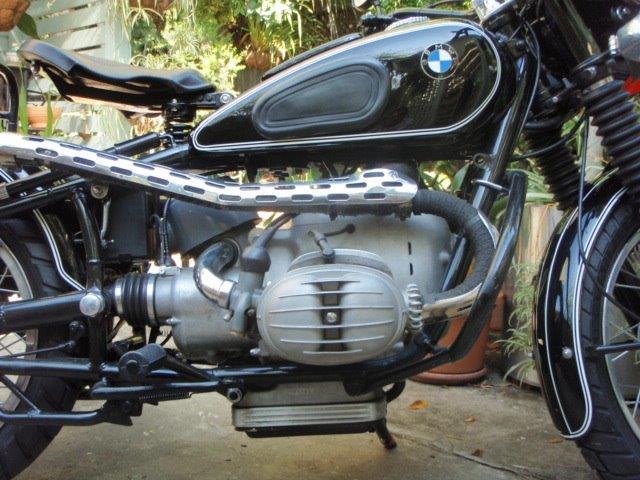
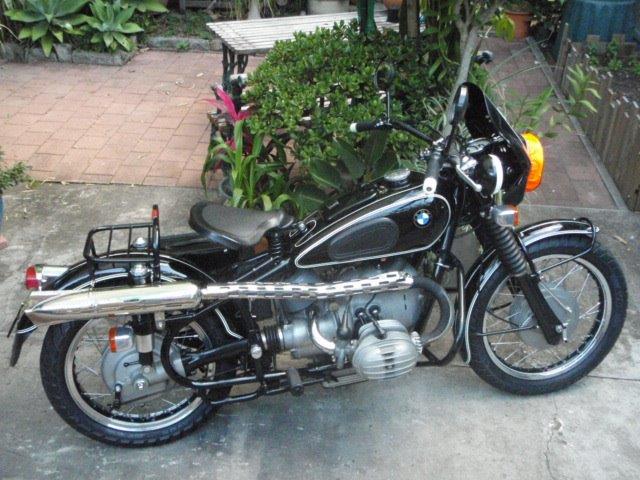
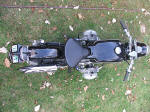
Below are some photos of Roland Slabon's 1952 R68 ISDT,
a project begun some 34 years ago with the purchase of the exhaust
system. The rest then followed. The R68 flange body Dell'Ortos are
numbered SSFF 27A, won't idle worth a damn (probably never made to
idle) and I wish I had a tuning manual for them. May have to reinstall
the original BINGs, which I had rebuilt just in case, and which were
used to test and tune the bike before the Dell'Ortos were fitted.
Only the Rennsport/Hoske front brake has full width shoes, but they're
stamped metal ones, not cast, and appear to be from a small car (Isetta,
perhaps?). |
 |
 |
 |
|
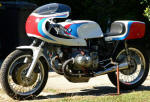
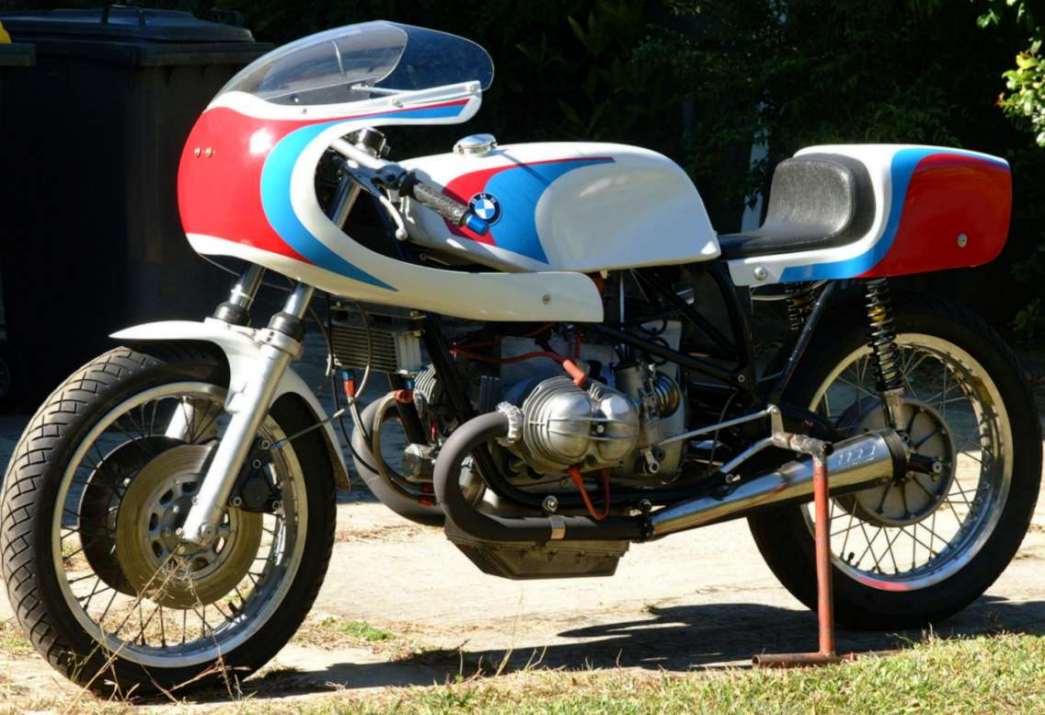
John Downs race bike, built in the mid 90s, its
engine was built by Jim Cray and produces 92bhp at the rear wheel. The
bike had won races as far afield as Pembrey in Wales, Chimay in
Belgium and Pukekohe in New Zealand. It was featured in Fast Classics
magazine in 1996.
 |
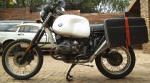
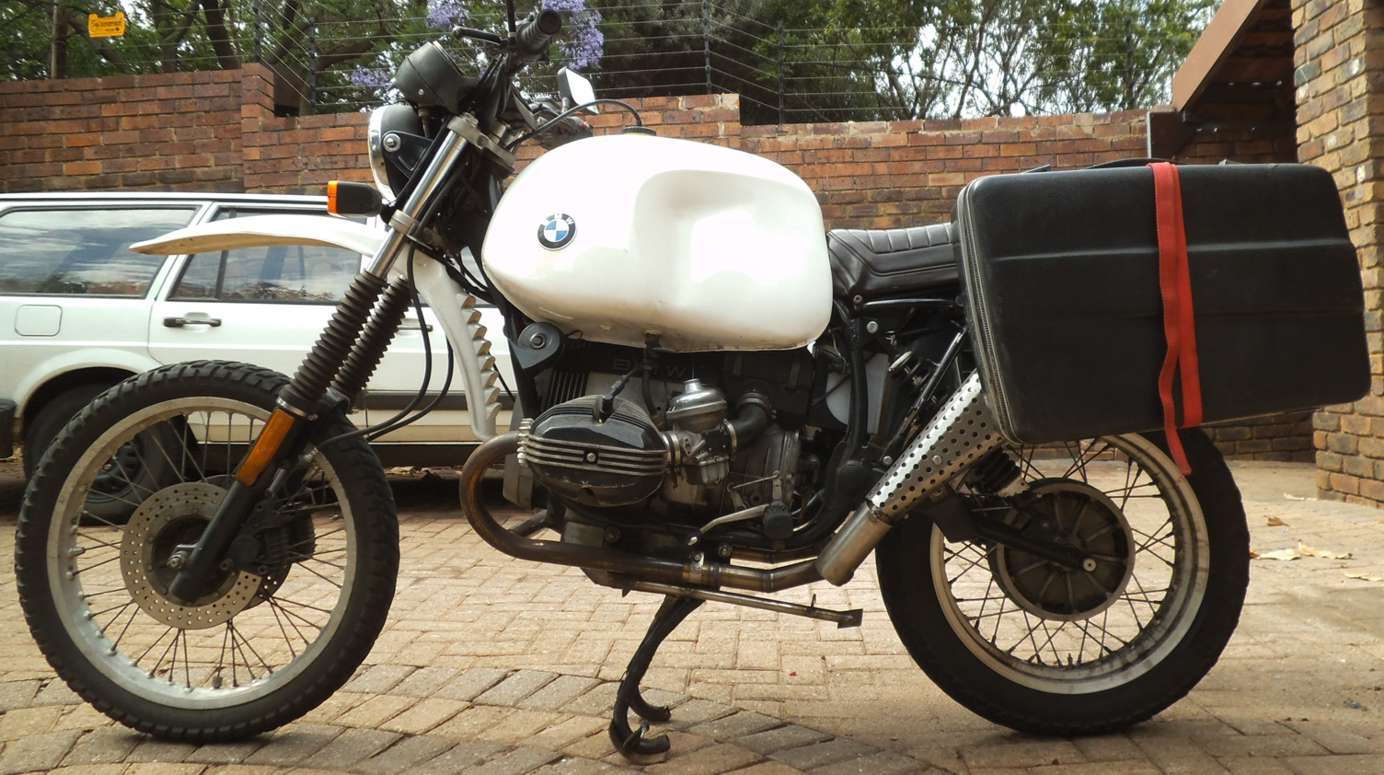
Phil Moser's 1981 R100ZSGS ( R100
Zwei Stoßdämpfer Gelände Straße / Twin Shock GS ), R65 frame modified
( copied HPN / Richard Moore) , 1000cc RS motor with 336° cam, 40L
Werner Reinschlussel tank,
handlebar selectable single / twin front discs for on /
off road conditions. 200 000+ kms.
|
|
|
BMW Apfelbeck - words courtesy of the BMW
Archives and photos/video supplied by Adriano Tim
In the late 1950s, Ludwig Apfelbeck from Knittelfeld,
Austria, works for BMW on the valve arrangement in the cylinder head
of its 4-stroke engines. His idea, diverging from all the other
4-valve designs, is to allot the opposing valves the same function,
thus achieving an even better cylinder fill and better thermal
conditions in the valve area at the same time. He designs the
so-called ‘Apfelbeck Head’ with vertically arranged inlet ducts. Since
1957, Apfelbeck has been working on improving the performance of BMW
engines. For his new task however, he uses an idea he had already
patented back in 1935. The first test-rig version (designed as a
5500cc 1-cylinder engine) proves that the valve control has to be
changed for a high power output. In this area, the propositions of
young engineer Paul Rosche mean a breakthrough.
In early 1965, the “Apfelbeck
Engine” delivers 129bhp per litre on the test rig. For BMW this means
being on the cusp of competitiveness regarding single-seater racing.
Furthermore, in the future, Apfelbeck’s design will be used to
establish numerous speed records.
|
| Apfelbeck
Engine
_small.JPG) |
Apfelbeck
Engine
_small.JPG) |
Apfelbeck
Engine
Quicktime
Movie |
| Krauser MKM
100 video by Adriano Tim
Quicktime Movie
|
|
|
|
Volpini BMW Photos by Adriano Tim |
_small.jpg) |
_small.jpg) |
_small.jpg) |
_small.jpg) |
_small.jpg) |
_small.jpg) |
_small.jpg) |
_small.jpg) |
_small.jpg) |
_small.jpg) |
_small.jpg) |
_small.jpg) |
_small.jpg) |
|
|
| ISDT
Replica Photo by Jack Cairns
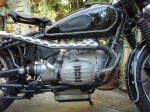 |
ISDT
Replica Photo by Jack Cairns
 |
|
High Resolution Photos
Due to large file sizes these will be slow to
download |
| |
|
|
Page 1
Page 2
Page 3
|


.JPG)
.JPG)
.jpg)
.jpg)
.jpg)
.jpg)
.jpg)
.jpg)
.jpg)
.jpg)
.jpg)
.jpg)
.jpg)
.jpg)
.jpg)